
Pedestrianism: The History, The Loss, and The Reclaiming of Foot-Travel
Whether you look through the lens of ancient creation or evolutionary history, one profound truth remains undeniable: the ability of human beings to stand upright and stride across the earth on two legs is an extraordinary wonder. Unlike any other creature, our upright posture lifts our gaze to the horizon and frees our hands to carry, build, and hold.
At the very foundation of this stride lies a masterpiece of natural engineering: the human foot. Composed of 26 bones, 33 joints, and over a hundred muscles, tendons, and ligaments working in flawless unison, the foot acts simultaneously as a flexible shock absorber, a spring-loaded catapult, and an intricate sensory terminal. It adapts instantly to every shift in terrain while bearing many times our body weight with every single step. No synthetic foam, plastic, leather, air, or even modern “barefoot” shoe can match the structural strength of a well-conditioned human arch and the sensory feedback of a naked foot meeting English soil.
For almost the entirety of the human story, walking was not merely a pastime, a sport, or an optional exercise—it was the primary way we experienced life, connected with each other, and navigated the world. Across the globe today, this timeless rhythm remains a daily reality for millions. Every morning, people set out on foot to fetch clean water, gather fuel for fires, tend fields, or trudge miles to work. For most, this isn’t a romantic lifestyle choice—it is a matter of pure necessity and lack of alternatives. Yet, while anyone walking six miles to work in the rain would trade their boots for a car key in a heartbeat, there is a deep irony in the modern trade-off: those reliant on their own two feet maintain a level of natural structural strength, foot arch resilience, and aerobic capacity that the card-carrying commuter spends fortunes trying to buy back at the gym.
It was from this universal foundation that Pedestrianism emerged as an athletic discipline in the 18th century. Long before commercial marathons, synthetic energy gels, and corporate sportswear, walking was England’s most electrifying, high-stakes spectator sport. Born on the dust, mud, and flint of English turnpikes, dukes, tavern keepers, and working-class crowds laid down fortunes on whether an ordinary man could cover vast distances against the clock.
At the pinnacle of this athletic golden age stood Foster Powell (1734–1793), an attorney’s clerk from Yorkshire who became England’s premier athlete. In 1773, Powell covered 400 miles from London to York and back in just 5 days and 18 hours. He performed his feats unassisted, wearing natural leather, wool, and linen, sustained by simple meals of tea, toast, and broth at roadside inns without mechanical aids or handlers. On the turnpike, social rank dissolved—rich and poor walked the exact same soil under the exact same sky. Powell proved that the unassisted human machine, when tuned by steady purpose, possesses physical capacity far beyond modern imagination.
Yet over the subsequent centuries, a tragic linguistic and cultural decay occurred. The word pedestrian—derived from the Latin pedester (“going on foot”)—was originally the ultimate tribute to athletic power, endurance, and fame. Today, dictionary definitions have reduced it to an insult: an adjective meaning dull, slow, unimaginative, or second-class, describing a passive bystander waiting at the curb for automated life to pass by.
Yet over the subsequent centuries, a tragic linguistic and cultural decay occurred. The word pedestrian—derived from the Latin pedester (“going on foot”)—was originally the ultimate tribute to athletic power, endurance, and fame. Today, dictionary definitions have reduced it to an insult: an adjective meaning dull, slow, unimaginative, or second-class, describing a passive bystander waiting at the curb for automated life to pass by.
pe·des·tri·an (noun) — A sovereign practitioner of foot travel who relies on unassisted human legs, natural lung capacity, and mental fortitude to navigate terrain.
(adjective) — Rooted, deliberate, and self-reliant; moving at human speed (3 to 4 mph) to break free from digital noise, synthetic dependency, and mechanical acceleration.
The Shared Turnpike & The Industrial Rupture
For generations under English Common Law, the street was a shared public commons. Pedestrians walked alongside horseback riders, stagecoaches, carrier wagons, and livestock. While horses and carriages moved faster than a walking stride, traffic moved at a human-scale pace—rarely exceeding 5 to 10 miles per hour. Drivers and riders could see, hear, and react to foot-travelers. Everyone held an equal, recognized right to occupy the road.
The true rupture arrived with the internal combustion engine at the turn of the 20th century. Heavy steel machines introduced unprecedented speeds—moving at three, four, then five times the speed of a trotting horse on narrow turnpikes built for boots and hooves. Drivers enclosed in glass and metal were insulated from the acoustic environment of the road, while pedestrians were exposed to fatal momentum and force.
Instead of designing vehicles to fit the human speed of the road, society forced the road to yield to high-speed machinery. When deaths predictably skyrocketed, the automotive industry launched a coordinated campaign to shift the blame from drivers onto walkers. In the 1920s, auto industry bureaus weaponized the derogatory slang “jay” (meaning a foolish country bumpkin) to coin “jaywalking”, publicly ridiculing anyone who asserted their ancient right to cross the road outside painted boxes. Through radio campaigns, newspaper lobbying, and school lectures, the foot-traveler was demoted from the sovereign owner of the highway to an inconvenient obstacle forced onto narrow concrete edges, made to wait at pelican crossings, and yield to motor cars.
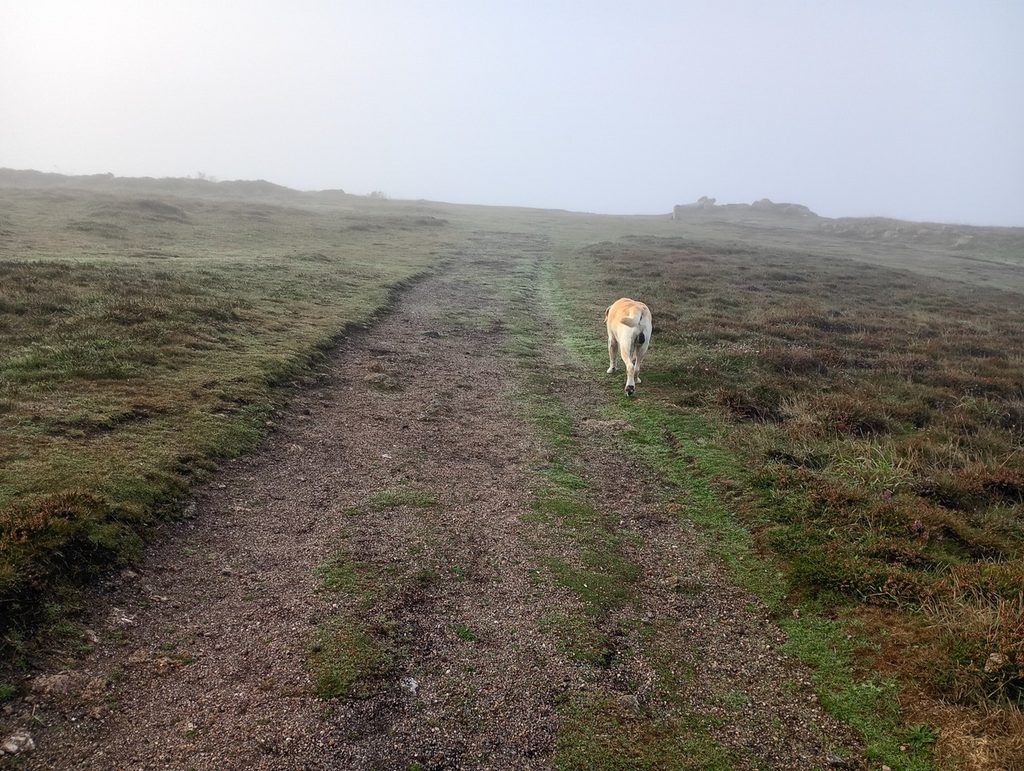
18th-Century Turnpike
- Open access for all foot-travellers
- Natural acoustic environment
- Rhythmic, uninterrupted stride
- Direct engagement with landscape
21st-Century Highway
- Squeezed, overgrown pavement verges
- Deafening engine noise & exhaust
- Blind bends, high-speed hazards
- Steel, tarmac, & digital isolation
The dominance of motor vehicles over foot-travelers is not a natural law—it was a corporate marketing strategy. By prioritizing the automobile, we built a landscape of sensory overload and physical atrophy, sitting enclosed in metal boxes at 60 mph, breathing exhaust, and arriving at destinations with tight hips, weakened foot arches, and shallow breath.
Why Pedestrianism Matters Now
Resurrecting Pedestrianism is not an exercise in historical nostalgia; it is a vital, urgent act of physical, mental, and ecological reclamation. Moving at a human pace under the 1773 Foster Powell Standard delivers three essential resets:
1. Biomechanical Reset
Ditching heavily cushioned, stacked-foam shoes in favour of flat, natural footwear restores the foot’s ancient architecture, engaging arches, splaying toes, and stabilizing ankle tendons through direct contact with soil, chalk, and stone.
2. Mental Circuit-Breaker
High speed forces the brain to process rapid, unnatural inputs, leading to chronic mental exhaustion. Decelerating to 3 or 4 mph lifts screen fatigue, quiets sensory overload, and allows thoughts to regain their natural clarity.
3. Public Sovereignty
Walking the 417 miles of The Great English Way from Falmouth to Canterbury in 100% pre-owned or natural heritage fibers rejects petroleum-based consumerism, reasserting the common-law right of the pedestrian to occupy the land.

Protecting those on foot and returning dignity to the open road restores health to our bodies, peace to our minds, and safety to our communities. The 18th-century pedestrians proved that human endurance is practically boundless when stripped of artificial clutter. By stepping onto the path, walkers do not merely take a recreational stroll—they join an unbroken tradition of self-reliance, physical vigour, and sovereign foot-travel.
“He sought no luxury on the turnpike, requiring only simple sustenance, a stout heart, and the open road before him.”
— Foster Powell (1734–1793), Patron Statesman of The Great English Way